NIL Is Becoming Bigger Business — And Documentation Matters More Than Ever
New NCAA documentation requirements, multi-athlete brand campaigns and the growth of integrated sponsorship are changing what it means to build a successful NIL business.
The NIL marketplace is entering another stage of growth — and athletes are increasingly being expected to operate like real businesses.
The biggest developments entering this week are not simply about who signed the largest endorsement deal. They are about documentation, brand activation, athlete portfolios, measurable results and the growing connection between traditional college sponsorship and individual athlete NIL.
For athletes and parents, the message is becoming clear: getting the opportunity is only the beginning. Being prepared to properly execute it is becoming just as important.
NCAA makes documentation consequences explicit
One of the most important compliance developments athletes should understand is NCAA Division I Proposal 2026-63. Adopted August 4 as emergency legislation with immediate effect, the amendment makes explicit that insufficient information or documentation — or refusal to provide it — can be grounds for a noninstitutional NIL contract or payment terms to go uncleared after the required notice process.
The practical lesson is simple: athletes should know who is paying them, what they are being paid, what they must deliver, what rights the brand receives, and where the signed documentation is stored.
Document it. Disclose it when required. Protect your eligibility.
Brands are building NIL teams
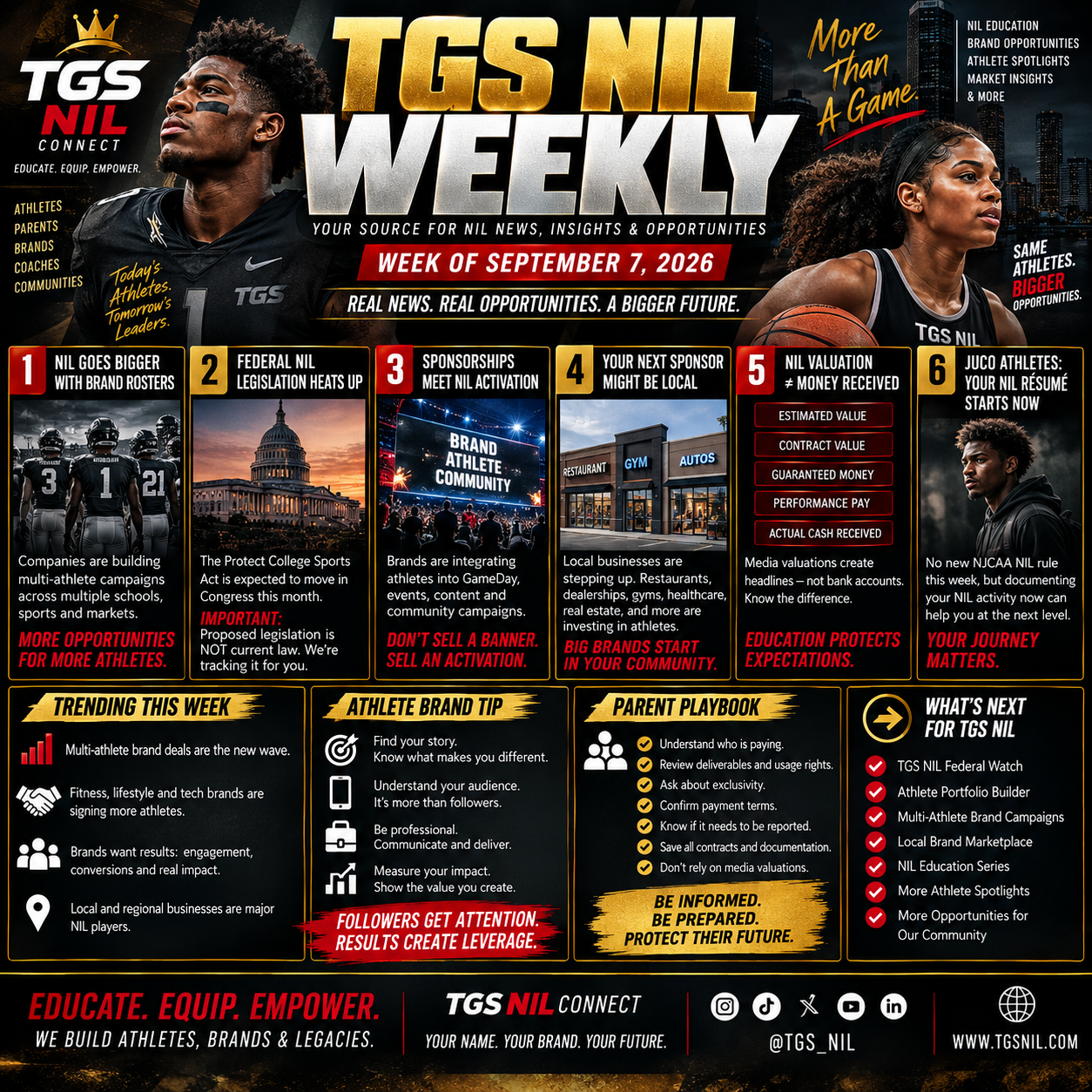
Another major trend is changing the way companies select athletes. Instead of signing one superstar, brands are increasingly assembling groups of athletes across multiple schools and markets.
JLab's college-football program is a strong example of the model. The company announced a 14-athlete football roster across multiple conferences while expanding its broader college footprint.
That creates opportunity for athletes who may never appear on national NIL valuation lists. A brand can activate several athletes across different communities and audiences instead of concentrating its entire campaign around one personality.
The marketplace should help brands find the right athletes — not simply the most famous athletes.
Your next sponsor might be local
The growth of NIL does not mean every athlete should wait for a global sports brand. Restaurants, automotive dealerships, credit unions, healthcare organizations, gyms, technology companies, real estate firms and local retailers can all be natural partners.
A regional business may value an athlete with 15,000 highly engaged local followers more than an athlete with a much larger national audience that does not match its customer base.
Don't only ask, "How many followers do I have?" Ask, "Who follows me — and which businesses want to reach those people?"
Followers get attention. Results create leverage.
Follower count still matters, but brands increasingly want to see reach, engagement, video views, clicks, promo-code usage, leads, sales, event attendance, audience demographics, content quality and reliable execution.
An athlete with a smaller but highly relevant audience and documented campaign performance can be more valuable to the right business than an athlete with a larger but less engaged following.
NIL valuation is not money in the bank
As NIL grows, one misconception continues to create unrealistic expectations: an athlete's estimated NIL valuation is not necessarily what that athlete earns.
An estimate of potential commercial value. It is not guaranteed earnings.
The compensation stated in an actual signed agreement.
Money contractually guaranteed under the agreement's terms.
Money dependent on deliverables, appearances, sales or other results.
Compensation that may come through a separate college-athletics structure.
The money that has actually reached the athlete.
A valuation can make a headline. Cash received changes a bank account.
JUCO athletes: your NIL résumé starts now
No consequential new national NJCAA NIL rule was identified for this week's edition. Junior-college athletes should still keep organized records of sponsorship agreements, payments, products received, affiliate income, appearances, brand contacts, completed content and campaign results.
That history can become part of the athlete's commercial résumé as opportunities grow or the athlete transfers.
What athletes should do this week
- Build your story. Know who you are outside your sport.
- Understand your audience. Know who follows you and why.
- Document your business. Save contracts, payments, deliverables and campaign results.
- Think locally. Your next partnership may already exist in your community.
- Measure your impact. Know what your content actually produces.
- Operate professionally. Respond, communicate, deliver and follow through.
The TGS NIL bottom line
NIL is becoming a complete sports-marketing ecosystem.
ATHLETE → STORY → AUDIENCE → BRAND → CAMPAIGN → ACTIVATION → RESULTS → RENEWAL
TGS NIL Connect is building around that future — helping athletes understand their value, develop professional brands, navigate the business of NIL and connect with opportunities while giving businesses better ways to discover and activate athletes.
Your Name. Your Brand. Your Future.