The NIL Business Is Evolving: Federal Action, Ownership Deals and the Rise of the Athlete Business Profile
The Senate has passed major college-sports legislation, NCAA reporting remains critical for DI-bound athletes, and the commercial side of NIL is expanding from endorsements into ownership, skills, commerce and long-term business opportunities.
This week's NIL landscape delivers an important reminder: college sports is no longer dealing with one isolated NIL marketplace. Federal policy, NCAA compliance, athlete entrepreneurship, brand partnerships, transfer rules and family financial education are increasingly connected.
For athletes and families, that means NIL education now has to cover more than visibility and social media. It increasingly requires an understanding of the business created by an athlete’s name, image and likeness.
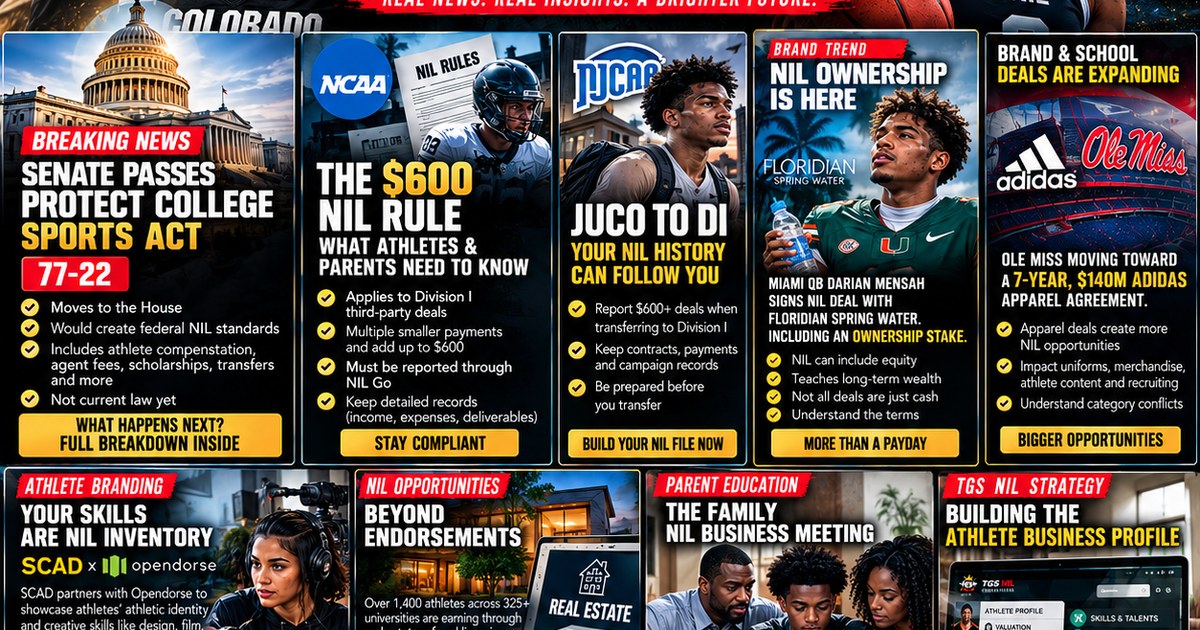
Senate Passes the Protect College Sports Act, 77–22
The U.S. Senate passed the Protect College Sports Act on September 28 by a 77–22 vote, sending the legislation to the House for consideration. The Senate measure seeks to establish federal protections and standards affecting NIL, scholarships, athlete health and safety, agents and other parts of the college-sports system.
The most important distinction for families: Senate passage does not mean the bill is federal law.
The House must still act, and the legislative process must be completed before the measure becomes enforceable federal law. TGS NIL should continue separating political headlines from the rules athletes must follow today.
INTRODUCED → SENATE/HOUSE ACTION → PASSED BOTH CHAMBERS → SIGNED → EFFECTIVE DATE
Source: U.S. Senate Committee on Commerce, Science & Transportation
NCAA Compliance: The $600 Threshold Still Matters
Current NCAA guidance says qualifying third-party NIL deals worth $600 or more must be reported for athletes subject to Division I reporting requirements. Smaller payments from the same payer can aggregate to the $600 threshold.
The NCAA also emphasizes that NIL income is generally taxable and that athletes should maintain accurate records of earnings and expenses.
Real business + real deliverables + reasonable value + documentation = the foundation of a defensible NIL transaction.
Source: NCAA Name, Image and Likeness guidance
JUCO to Division I: Your NIL History Can Follow You
No consequential new national NJCAA NIL rule is driving this week's briefing. The major education issue remains what happens when a two-year-college athlete plans to compete in Division I.
NCAA guidance says qualifying third-party NIL deals worth $600 or more — including aggregated smaller payments from the same payer — can carry reporting obligations when the athlete enters the Division I system.
Contracts • Sponsor contacts • Payments • Products received • Affiliate income • Deliverables • Content screenshots • Campaign analytics
For JUCO athletes, the lesson is simple: do not wait until transfer season to organize your NIL business.
NIL Ownership: Athletes Are Starting to Think Beyond the Check
Miami quarterback Darian Mensah reportedly signed an NIL agreement with Floridian Spring Water that includes an ownership stake in the company. The specific economics were not publicly disclosed.
That makes the deal educationally important. NIL compensation can increasingly include more than cash, products or appearance fees.
The next NIL question may not be “How much are they paying me?” It may be “What am I building with them?”
Equity is not automatically better than cash. Athletes and families need to understand company valuation, dilution, vesting, liquidity, taxes and the actual rights attached to an ownership stake.
Your Sport Is Not Your Only NIL Asset
Athlete marketability can extend beyond followers and on-field performance. Creative ability, public speaking, photography, videography, coaching, entrepreneurship, music and other professional skills can all become part of an athlete's commercial identity.
For athletes and families, the lesson is that a complete NIL profile can include skills and talents beyond athletic performance.
SPORT + AUDIENCE + STORY + SKILLS + CONTENT ABILITY + COMMUNITY + BUSINESS INTERESTS + VERIFIED RESULTS
NIL Opportunities Are Expanding Beyond Endorsements
The NIL marketplace should not be limited to sponsored posts. Athletes can encounter opportunities involving merchandise, affiliate programs, camps, speaking engagements, entrepreneurship, licensing, internships and other business pathways.
Across the NIL industry, the opportunity set is broadening beyond traditional endorsement deals into a wider range of athlete business opportunities.
Apparel Deals Can Create Brand Conflicts
As school apparel and sponsorship agreements become larger and more integrated with NIL, athletes need to understand the difference between a school's commercial relationship and their own personal endorsement agreements.
Uniform obligations, official team activities, category exclusivity and content rights can all affect when and where an athlete can promote a competing company.
Your school signing a brand does not automatically erase your personal NIL deal — but the contracts and usage rules matter.
Parents Need an NIL Business Meeting
NIL education should increasingly become family education. Once money, contracts and deadlines are involved, families need a repeatable system.
A monthly family NIL meeting should review:
- Deals signed and pending.
- Payments received and outstanding.
- Taxes reserved.
- Deliverables and deadlines.
- Contract expiration dates.
- Potential brand conflicts.
- Social and campaign analytics.
- Merchandise sales.
- New opportunities.
- Savings and long-term financial goals.
Treat NIL like a family business before it becomes family money.
What Athletes and Families Should Take Away This Week
The NIL environment continues to become more structured and more complex. Athletes should keep complete deal records, understand Division I reporting obligations, distinguish proposed federal legislation from current law, and evaluate compensation based on the full terms of an agreement — not just the headline dollar amount.
Families should also remember that NIL opportunities increasingly extend beyond sponsored social posts. Ownership interests, merchandise, appearances, creative services, affiliate arrangements and other commercial opportunities can all require different financial, legal and compliance considerations.
TGS NIL Weekly will continue following the rules, legislation, brand activity and athlete-business developments shaping the NIL landscape.